

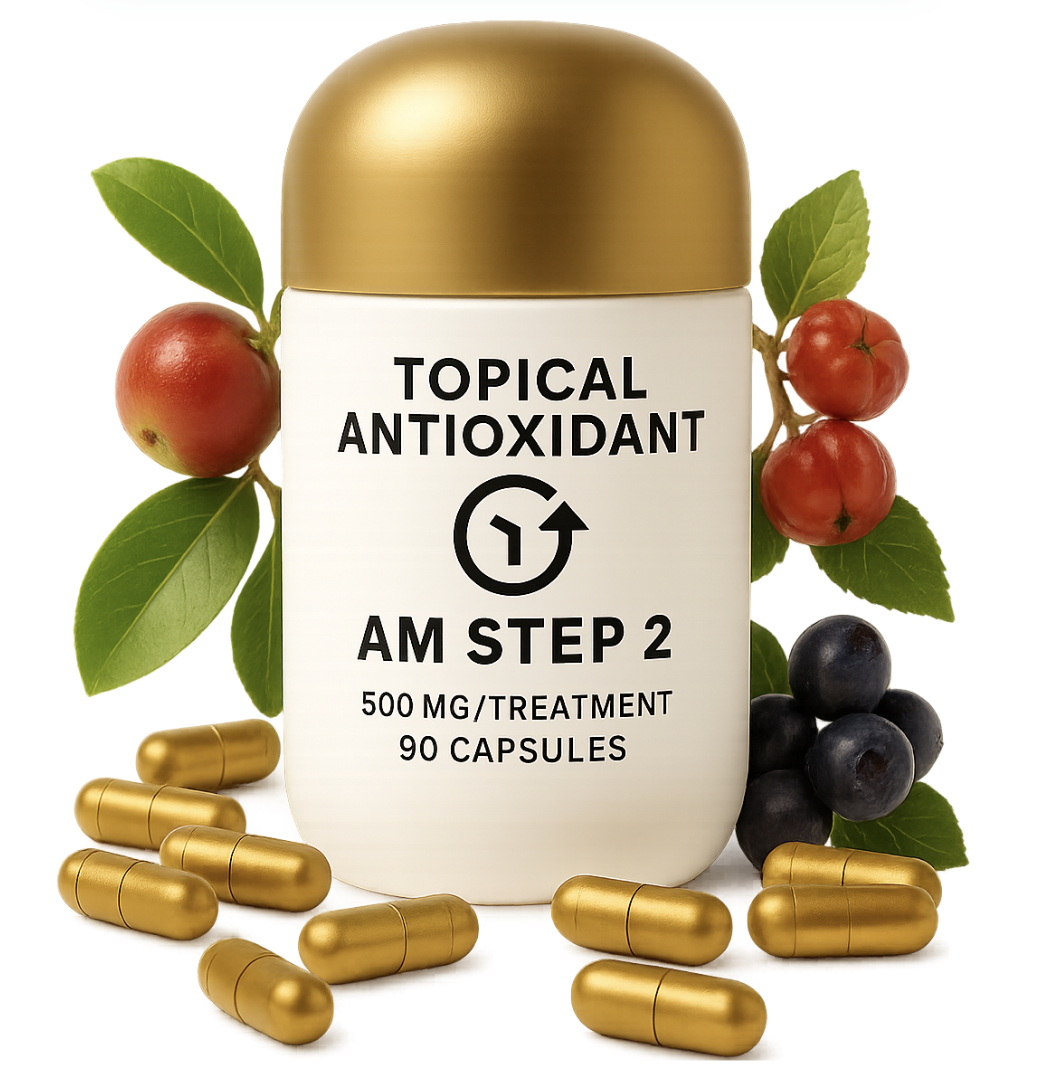
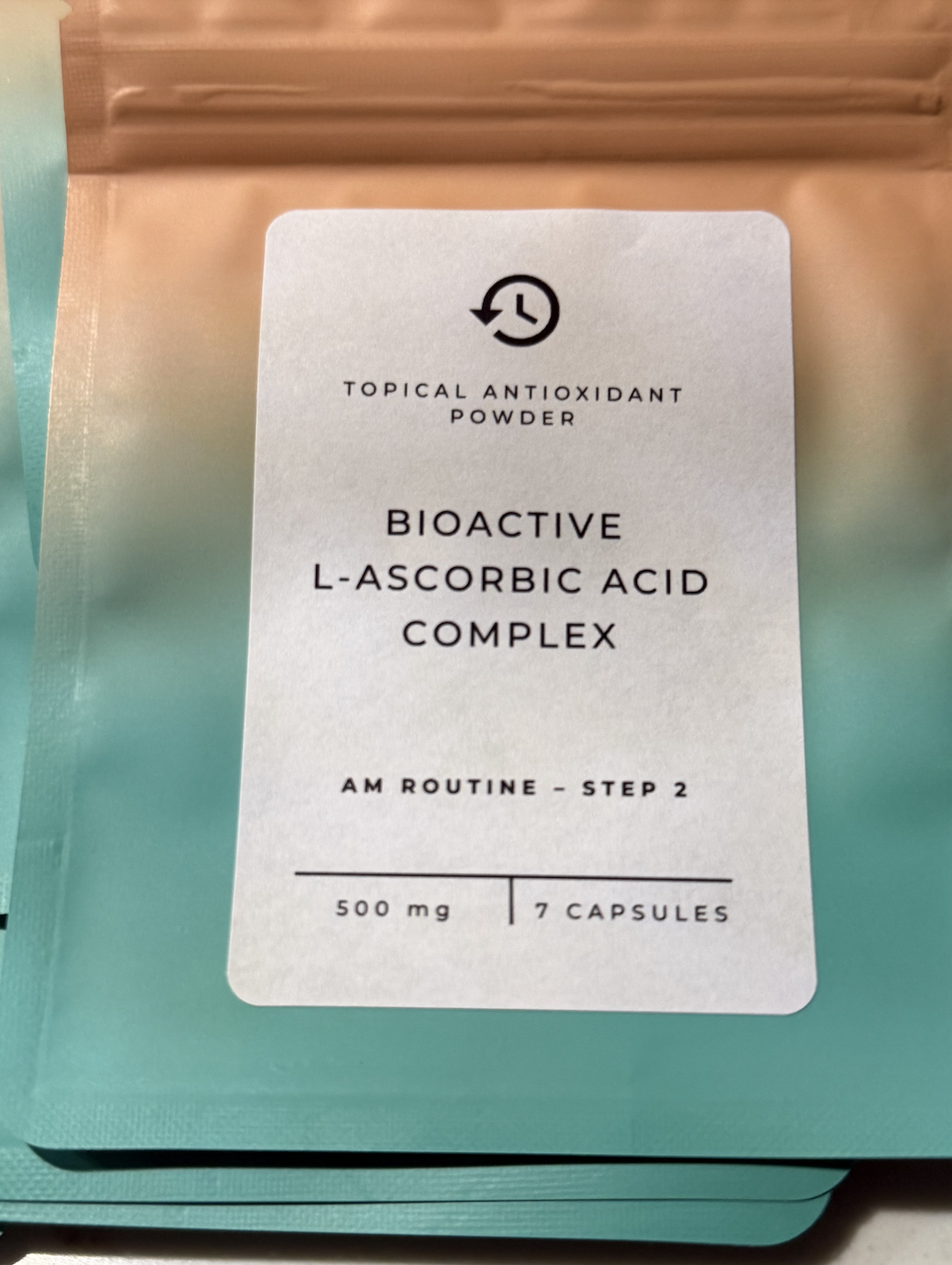
Vitamin C Powder – Bioactive Antioxidant Complex
Price range: $35.00 through $275.00
Vitamin C Powder – Bioactive Antioxidant Complex
- Description
- Ingredients
- Stability & Storage
- The Science
- Sustainability
- Additional information
- Reviews (0)
Description
7 Capsules | up to 21-day supply
30 Capsules | up to 3 months supply
90 Capsules | up to 9 months supply
Vitamin C Powder – Bioactive Antioxidant Complex
A powerful system for skin renewal and defense.
L-ascorbic acid is Vitamin C in its bioavailable form—the exact molecule your skin recognizes and uses to protect, renew, and brighten itself. Unlike derivative forms of Vitamin C, bioavailable L-ascorbic acid requires no conversion. It penetrates the skin barrier, and is immediately utilized by skin cells, delivering measurable results: antioxidant defense, collagen stimulation, improved tone, and visible regeneration.
In human physiology, Vitamin C is a required cofactor for collagen synthesis, a regulator of gene expression in dermal fibroblasts, and a critical antioxidant in both the epidermis and dermis. It’s one of the few topical actives proven to reverse oxidative damage at the molecular level.
THE RESULT: firmer, brighter, smoother skin that actively resists environmental stress and UV radiation.
Benefits
- Antioxidant Defense: Neutralizes UV- and pollution-related free radicals; regenerates Vitamin E; prevents oxidative damage to DNA, lipids, and proteins; prevents DNA mutations, benign growths and cancerous lesions
- Collagen Biosynthesis: Stimulates collagen production for firmness; prevents fine lines and wrinkles
- Immune Support: Essential for immune defense
- Skin Brightening: Inhibits tyrosinase; prevents and fades dark spots; evens tone
- Healing & Repair: Accelerates tissue and wound healing and cellular regeneration
- Capillary Strength: Prevents capillary fragility, broken capillaries and redness; improves circulation, oxygen and nutrient delivery
- Barrier Protection: Reinforces hydration and lipid structure
- Anti-Inflammatory: Calms irritation; supports sensitive and acne-prone skin
- Texture Improvement: Promotes smooth, refined surface through healthy turnover
- UV Protection Synergy: Enhances sunscreen performance and photo-protection
- Luminosity: The immediate, all-day glow is driven by condensed acidic L-AA loosening bonds between dead skin cells — smoothing microtexture and intensifying light reflection. Combined with subtle protein contraction, it tightens, firms, and reveals a radiant complexion
CONCENTRATION
5% | 10% | 15% | 20%
The strength of the solution you mix should meet the condition of your skin barrier.
For first-time use, begin with a pea-sized amount of powder (≈1/3 of a capsule) mixed with 10 drops of water, then perform a patch test behind your ear. If well tolerated, or if you feel only a light tingling, apply the solution to your face, finishing with the more sensitive nose and mouth areas.
If you experience stinging, dilute your freshly mixed solution by adding 5 or more drops of water until it feels comfortable. As your skin barrier strengthens, you can gradually increase the concentration up to 20%.
SINGLE CAPSULE USAGE
-
Face only: Use ⅓ of the capsule per application — a 3-day supply.
-
Face–ears–neck–chest: Use ½ of the capsule per application — a 2-day supply.
-
Face–ears–neck–chest–shoulders–outer arms–hands: Use the full capsule per application — single-day supply.
To preserve maximum potency, open each capsule no more than three times and reseal it immediately after dispensing each portion.
*Do not place an opened capsule back into the original packaging.
How to Use
APPLICATION STEPS
-
With dry hands, quickly remove one capsule, then tightly seal the bottle/bag and return it to the refrigerator.
-
Hold the capsule vertically with the long end pointing downward.
-
Using your dominant hand, gently tap the capsule a few times to settle the powder at the bottom, then twist and pull off the shorter cap — the capsule is now open.
-
Pour the desired amount of product into your non-dominant palm, then reseal the capsule and store it in a cool, dark place (mini cooler or drawer), ideally for no longer than 2 days.
OPTION 1. FACE ONLY
-
Mix ⅓ of the capsule (pea size) with approximately 5–10 drops of water (0.25–0.5 mL). Using less water produces a more concentrated solution. You may substitute an equal amount of water for 3–4 drops of Maximal Strength Serum. Activate the formula in your palm by using micro-circular fingertip motions until the powder dissolves into a smooth, even-textured serum.
-
Apply to clean, dry skin.
-
Massage gently until absorbed.
-
Store sealed leftover capsule in a dry, dark, cool place and use within 1–2 days.
OPTION 2. FACE–EARS–NECK–CHEST
-
Mix ½ capsule with 10–15 drops of water (0.5–0.75 mL). You may substitute an equal amount of water for 6–8 drops of Maximal Strength Serum.
OPTION 3. FACE–EARS–NECK–CHEST–SHOULDERS–ARMS–HANDS
(Ideal for regions with high UV exposure)
-
Mix full capsule with 15–20 drops of water (0.75–1 mL). You may substitute an equal amount of water for 9–12 drops of Maximal Strength Serum.
NOTE
-
When possible, apply 20–30 minutes before stepping outdoors to prevent deactivation by light before absorption
-
Serum pH: 2.5–3.5 for optimal potency
-
Topical L-ascorbic acid has a saturation limit in the skin. Excessive use may lead to product oxidation or irritation without added benefit
FREQUENCY
Use daily in the morning and for immediate recovery following UV overexposure including before, during, or after flights.
*Do not apply to sunburned or irritated skin
FIRST-TIME USERS
If experiencing mild tingling that persists after one week of use, we recommend a virtual consultation with our functional aesthetician to ensure barrier health and optimal tolerance.
CAUTION
Avoid contact with eyes. If contact occurs, rinse thoroughly with water. Keep out of reach of children.
Ingredients
USP-grade L-ascorbic acid (bioavailable form of Vitamin C) that meets standards for use in pharmaceuticals and dietary supplements
Organic Malpighia emarginata (Acerola) Fruit Extract
Organic Aristotelia chilensis (Maqui) Fruit Extract
Organic Euterpe oleracea (Açaí) Fruit Extract
Organic Myrciaria dubia (Camu-camu) Fruit Extract
Glutathione
SELECT BIOACTIVE COFACTORS (MORE THAN 500 IN TOTAL)
Antioxidants
-
L-ascorbic acid – Boosts collagen, brightens skin, and protects from UV damage (Camu-camu, Acerola, Maqui, Açaí)
-
Vitamin E – Moisturizes and protects skin barrier from oxidative stress (Açaí)
-
L-glutathione – Enhances cellular detoxification, balances pigmentation, and protects against oxidative stress (Supplemental)
-
Magnesium Ascorbyl Phosphate (MAP) – Stabilized vitamin C derivative that brightens, stimulates collagen, and reduces irritation (Supplemental)
-
Anthocyanins – Fight aging and redness by protecting collagen and calming inflammation (Maqui, Açaí, Camu-camu)
-
Carotenoids (beta-carotene, lutein) – Prevent photoaging and give skin a radiant glow (Acerola, Açaí)
-
Flavonoids (rutin, quercetin) – Reduce inflammation and improve skin tone (Camu-camu, Maqui)
Polyphenols
-
Ellagic acid – Lightens dark spots and prevents collagen breakdown (Camu-camu, Maqui)
-
Proanthocyanidins – Improve skin elasticity and microcirculation (Acerola, Maqui)
-
Catechins – Calm inflammation and reduce UV-induced skin damage (Camu-camu, Acerola)
-
Gallic acid & protocatechuic acid – Soothe irritated skin and have antimicrobial properties (Maqui)
Vitamins
-
Vitamin A (as beta-carotene) – Enhances cell turnover and reduces signs of aging (Acerola, Açaí)
-
B vitamins (B1, B2, B3, B6) – Help maintain skin hydration and smooth texture, reduce inflammation (Açaí)
Minerals
-
Zinc – Helps heal acne and regulate oil production (Açaí, Maqui)
-
Magnesium – Soothes inflammation and boosts skin hydration (Camu-camu, Maqui)
-
Iron – Supports oxygen delivery for healthy skin tone and repair (Açaí, Maqui)
-
Potassium – Maintains skin moisture balance (Camu-camu, Açaí, Maqui)
-
Calcium – Strengthens skin barrier and supports renewal (Maqui, Açaí)
-
Phosphorus – Aids in skin cell repair and energy production (Camu-camu)
Enzymes & Cofactors
-
GalLDH enzyme – Supports natural vitamin C synthesis in the fruit, aiding collagen indirectly (Camu-camu)
-
NAD⁺ (cofactor) – Promotes skin repair and anti-aging through energy metabolism (Camu-camu)
-
Polyphenol oxidases – Can influence pigmentation and antioxidant response (Acerola, Açaí)
Fatty Acids
-
Oleic acid (omega-9) – Deeply moisturizes and repairs skin barrier (Açaí)
-
Linoleic acid (omega-6) – Reduces acne and improves skin smoothness (Açaí)
-
Palmitic acid – Helps maintain skin softness and lipid balance (Açaí)
ADDITIONAL SKIN BENEFITS OF BIOACTIVE MATRIX
Antioxidants
-
Protect skin from oxidative stress and UV damage
-
Stimulate collagen production and reduce signs of aging
-
Brighten skin tone and reduce inflammation
Polyphenols
-
Prevent collagen breakdown and loss of elasticity
-
Improve skin circulation and reduce pigmentation
-
Soothe irritation and support skin repair
Vitamins
-
Support cell turnover and skin renewal
-
Hydrate and maintain skin texture and tone
-
Help reduce dryness, dullness, and fine lines
Minerals
-
Regulate oil production and fight acne
-
Strengthen the skin barrier and support healing
-
Maintain moisture balance and energy for cell repair
Enzymes & Cofactors
-
Enhance skin’s natural antioxidant defenses
-
Support collagen synthesis and anti-aging repair
-
Influence pigmentation and skin tone evenness
Fatty Acids
-
Deeply moisturize and restore skin barrier
-
Reduce inflammation and balance oily or acne-prone skin
-
Maintain smoothness, softness, and skin flexibility
Stability & Storage
Why Powder, Not Serum
L-ascorbic acid (Vitamin C) is chemically unstable in water. Once dissolved, it reacts with oxygen, forming dehydroascorbic acid—an oxidized, inactive compound. This oxidation is accelerated by light, heat, and trace metals, meaning most water-based serums degrade within weeks.
Our anhydrous (water-free) powder avoids this process entirely. It stays inert until activated with water just before use—delivering freshly active Vitamin C that penetrates deeply and performs at full potency.
Stability & Storage
L-ascorbic acid is deactivated by exposure to oxygen (air and water), light, and elevated temperatures. It’s water-soluble and requires a low pH — ideally between 2.5 and 3.5. In this acidic environment, the molecule stays active longer and is better absorbed by the skin.
Manufacturer Instructions
- Store at 4–8 °C (39–46 °F) for optimal stability; up to 20 °C (68 °F) is acceptable short-term
- Avoid warm, humid areas such as bathrooms or direct sunlight (e.g., near windows)
- Keep the desiccant and oxygen absorber inside the container
- Use a container that blocks light, seals tightly, and minimizes air exposure (little to no headspace)
- Open each capsule no more than 3–4 times to maintain potency and prevent oxidation
- Reseal the capsule immediately after dispensing a portion of the capsule contents
The Science
L-Ascorbic acid is widely utilized in research focused on:
- Nutritional Supplements: Commonly found in vitamin C supplements, it supports immune function and skin health, making it essential for dietary formulations.
- Cosmetic Formulations: Used in skincare products for its brightening properties and ability to reduce signs of aging, enhancing the efficacy of creams and serums.
- Food Preservation: Acts as a natural antioxidant in food products, helping to prevent spoilage and maintain freshness, particularly in fruits and beverages.
- Pharmaceutical Applications: Plays a role in the synthesis of various drugs and is used in formulations to improve the stability and absorption of active ingredients.
- Biochemical Research: Serves as a reducing agent in laboratory experiments, aiding in the study of oxidative stress and cellular processes, which is crucial for advancing medical research.
Why Skin Needs L-ascorbic Acid: Free Radicals and Oxidative Stress
Today, scientists attribute 80–90% of visible signs of aging to UV radiation—electromagnetic energy emitted by the sun.
UV rays are powerful enough to penetrate our skin deep into the dermis. In oxygen molecules, UV photons knock electrons out of orbit or push them to higher energy states, making molecules unstable—creating reactive oxygen species (ROS), or what we call free radicals.
Reactive Oxygen Species (ROS)
Free radicals are highly reactive, unstable molecules with unpaired electrons. In order to stabilize themselves, they “steal” electrons from nearby molecules. Each new free radical continues the cycle, creating a chain reaction called oxidative stress. Unless ROS are neutralized, oxidative stress continues indefinitely, accelerating premature aging at the molecular level.
Direct Damage
Free radicals destabilize and damage lipids, proteins, and DNA.
When this damage is not repaired in time, it leads to mutations in genes that control cell growth and repair (such as tumor-suppressor genes). That’s why long-term UVA exposure is linked to melanoma and some non-melanoma skin cancers, as well as photoaging—loss of skin volume, elasticity, deep wrinkles, sagging, uneven texture and tone, dark spots, and benign growths.
Free radicals cause cellular damage, DNA mutations, and cellular death or senescence (a state in which cells can no longer maintain their functions), breaking down fibers of collagen and elastin that hold our skin giving it its smooth appearance.
Oxidative stress results in long-term structural damage, a progressive loss of skin integrity, visible signs of aging, and an increased risk of benign growths and carcinogenesis.
The cumulative effect shows as premature aging:
- Fine lines and wrinkles
- Uneven tone, hyperpigmentation, dark spots
- Rough texture
- Cancerous lesions
- Inflammation
- Broken capillaries
- Barrier deterioration and thinning of the skin
- Loss of firmness and elasticity
- Benign growths
- Pre-cancerous and cancerous lesions
WHAT ARE ANTIOXIDANTS
Antioxidants are biologically active molecules capable of donating electrons to reactive oxygen species (ROS) or other free radicals, thereby neutralizing and stabilizing them. This process mitigates oxidative damage, prevents oxidative stress, and supports cellular recovery and repair mechanisms.
Consequently, antioxidants are regarded as some of the most vital agents in skincare, owing to their protective and restorative effects on the skin.
WHY BIO COMPLEX
L-ascorbic acid is highly unstable. In nature, just like our heart beats only while all other organs function, antioxidants are also supported by highly intelligent and interdependent networks of cofactors. This bioactive matrix allows not only for stability and prolonged effect but also delivers far more than L-ascorbic acid (L-AA) alone can offer.
BIOAVAILIBILITY
L-ascorbic acid is the only bioavailable form of vitamin C, identical to what’s found in the human body. Meaning it doesn’t need to be converted by the body and can be effectively absorbed through the skin barrier and used immediately by skin cells to deliver antioxidant protection, stimulate collagen production, heal, strengthen, and brighten the skin.
ADVANTAGES OF BIO MATRIX
Comprehensive molecular speciation of our naturally enhanced vitamin C complex identifies over 500 distinct bioactive cofactors, supporting unmatched antioxidant performance and enhanced cellular uptake.
This diverse phytochemical matrix contributes to synergistic effects on dermal regeneration, barrier repair, pigmentation balance, and inflammatory modulation—positioning these botanicals as highly effective actives in advanced skin therapeutics and functional skincare formulations.
SOURCING
Açaí berry, Camu-camu, Acerola cherry, and Maqui berry are among the richest natural sources of L-ascorbic acid on Earth — each containing extraordinary concentrations of bioavailable Vitamin C along with hundreds of synergistic phytonutrients and biological cofactors that significantly broaden its benefits and enhance both stability and absorption.
Our vitamin C is enriched with the organic natural bio-mass of the four top-rated super fruits that contain up to 50% more L-ascorbic acid than citrus or any other known antioxidant-rich plants. Sourced from the Amazon rainforest, this ultra-fine, water-activated powder delivers unmatched purity, stability, and effectiveness for immediate cell repair and regeneration, allowing for brighter, healthier, younger complexion and more resilient skin.
Natural cofactors dramatically enhance the bioavailability of Vitamin C and extend its effects far beyond what a synthetic isolate can achieve. Over millennia, the human body has evolved to recognize, absorb, and utilize Vitamin C in its natural matrix, not as a laboratory replica stripped of its complex and powerful biological network.
COFACTORS
Açaí berry, camu camu, acerola cherry, and maqui berry come packaged with vitamins, flavonoids, carotenoids, enzymes, polyphenols, and fatty acids that
-
Slow down L-AA breakdown (improved stability)
-
Extend plasma retention time (bioavailability and a lasting effect)
-
Add independent antioxidant actions (ROS scavenging, inflammation control, DNA protection)
The body loves natural ingredients because it can use the full package of supporting compounds for different purposes. This whole-L-AA complex delivers the highest natural L-AA content with superior stability and a rich array of cofactors. Their impact goes far beyond what lab-developed vitamin C can offer, allowing men and women to sustain skin health, beauty, and prevent not only premature aging but also skin pathogenesis and cancer.
SYNERGY
Açaí berry → Great for inflammation, vascular support, and skin resilience.
Camu camu → Collagen synthesis, immune defense, pigmentation control.
Acerola → Immunity, post-inflammatory hyperpigmentation, skin radiance, glow, reduced dullness (stabilizing L-AA, slowing its breakdown).
Maqui berry → Brightening, excellent for redness reduction (vascular), suppresses pigmentation indirectly, ROS scavenging, UV protection, anti-inflammatory, anti-aging, and DNA-protective.
DEACTIVATION
L-ascorbic acid is inherently unstable and prone to oxidation. Oxidation is a process where vitamin C reacts with oxygen, giving away its extra electron, leading to degradation and loss of its beneficial properties.
Factors that deactivate L-AA:
-
Oxygen (air and water)
-
Light
-
Temperatures >20°C (Ideal 4-8°C | 39.2–46.4 °F)
FORM: WHY POWDER
Once exposed to oxygen present in air and water-based serums, L-AA begins to oxidize and lose its efficacy. Our anhydrous (water-free) powder stays stable and resists degradation until it’s freshly activated, absorbed, and utilized by the skin.
Proper formulation greatly enhances L-AA’s effects on the epidermis and dermis:
-
Low pH (2.5–3.5)
-
Natural stabilizing agents (bioactive matrix)
-
Water-soluble base (mixed freshly before application)
-
Encapsulation (to prevent contact with oxygen, moisture, and light)
-
Refrigeration: remains stable at temperatures ≤ 20 °C, ideally 4 – 8 °C
- Effective concentrations: 10% – 20% for optimal epidermal and dermal penetration.
ADDITIONAL SKIN BENEFITS OF BIOACTIVE MATRIX
Antioxidants
-
Protect skin from oxidative stress and UV damage
-
Stimulate collagen production and reduce signs of aging
-
Brighten skin tone and reduce inflammation
Polyphenols
-
Prevent collagen breakdown and loss of elasticity
-
Improve skin circulation and reduce pigmentation
-
Soothe irritation and support skin repair
Vitamins
-
Support cell turnover and skin renewal
-
Hydrate and maintain skin texture and tone
-
Help reduce dryness, dullness, and fine lines
Minerals
-
Regulate oil production and fight acne
-
Strengthen the skin barrier and support healing
-
Maintain moisture balance and energy for cell repair
Enzymes & Cofactors
-
Enhance skin’s natural antioxidant defenses
-
Support collagen synthesis and anti-aging repair
-
Influence pigmentation and skin tone evenness
Fatty Acids
-
Deeply moisturize and restore skin barrier
-
Reduce inflammation and balance oily or acne-prone skin
-
Maintain smoothness, softness, and skin flexibility
BIOACTIVE COFACTORS (over 500 total)
Antioxidants
-
L-ascorbic acid – Boosts collagen, brightens skin, and protects from UV damage (Camu-camu, Acerola, Maqui, Açaí)
-
Vitamin E – Moisturizes and protects skin barrier from oxidative stress (Açaí)
-
L-glutathione – Enhances cellular detoxification, balances pigmentation, and protects against oxidative stress (Supplemental)
-
Magnesium Ascorbyl Phosphate (MAP) – Stabilized vitamin C derivative that brightens, stimulates collagen, and reduces irritation (Supplemental)
-
Anthocyanins – Fight aging and redness by protecting collagen and calming inflammation (Maqui, Açaí, Camu-camu)
-
Carotenoids (beta-carotene, lutein) – Prevent photoaging and give skin a radiant glow (Acerola, Açaí)
-
Flavonoids (rutin, quercetin) – Reduce inflammation and improve skin tone (Camu-camu, Maqui)
Polyphenols
-
Ellagic acid – Lightens dark spots and prevents collagen breakdown (Camu-camu, Maqui)
-
Proanthocyanidins – Improve skin elasticity and microcirculation (Acerola, Maqui)
-
Catechins – Calm inflammation and reduce UV-induced skin damage (Camu-camu, Acerola)
-
Gallic acid & protocatechuic acid – Soothe irritated skin and have antimicrobial properties (Maqui)
Vitamins
-
Vitamin A (as beta-carotene) – Enhances cell turnover and reduces signs of aging (Acerola, Açaí)
-
B vitamins (B1, B2, B3, B6) – Help maintain skin hydration and smooth texture, reduce inflammation (Açaí)
Minerals
-
Zinc – Helps heal acne and regulate oil production (Açaí, Maqui)
-
Magnesium – Soothes inflammation and boosts skin hydration (Camu-camu, Maqui)
-
Iron – Supports oxygen delivery for healthy skin tone and repair (Açaí, Maqui)
-
Potassium – Maintains skin moisture balance (Camu-camu, Açaí, Maqui)
-
Calcium – Strengthens skin barrier and supports renewal (Maqui, Açaí)
-
Phosphorus – Aids in skin cell repair and energy production (Camu-camu)
Enzymes & Cofactors
-
GalLDH enzyme – Supports natural vitamin C synthesis in the fruit, aiding collagen indirectly (Camu-camu)
-
NAD⁺ (cofactor) – Promotes skin repair and anti-aging through energy metabolism (Camu-camu)
-
Polyphenol oxidases – Can influence pigmentation and antioxidant response (Acerola, Açaí)
Fatty Acids
-
Oleic acid (omega-9) – Deeply moisturizes and repairs skin barrier (Açaí)
-
Linoleic acid (omega-6) – Reduces acne and improves skin smoothness (Açaí)
-
Palmitic acid – Helps maintain skin softness and lipid balance (Açaí)
L-Ascorbic acid, commonly known as Vitamin C, is a vital water-soluble vitamin renowned for its antioxidant properties and essential role in various biological functions. This compound is widely utilized as a preservative, while also serving as a key ingredient in dietary and skincare supplements aimed at boosting immune health.
In the cosmetic sector, L-Ascorbic acid is celebrated for Its unique ability to scavenge free radicals not only helps in preventing oxidative stress but also enhances the stability of other ingredients in formulations, providing added value to products. It also known for its skin-brightening effects and ability to promote collagen synthesis, making it a top choice in skincare formulations.
Researchers and industry professionals appreciate L-Ascorbic acid for its versatility and effectiveness in various applications. Its role in enhancing iron absorption in the body and its potential in reducing the risk of chronic diseases including skin cancer further underscore its importance in health and nutrition. With its proven benefits and wide-ranging applications, L-Ascorbic acid stands out as a crucial compound for those looking to improve skin resilience and beauty, health outcomes, and product efficacy.
Sustainability
To reduce overproduction and minimize environmental impact, we’ve introduced a local refill program that rewards conscious packaging reuse. By reusing (refilling) your original packaging, you help reduce material waste, carbon emissions, and microplastic pollution — plus receive a $10 credit as a thank-you for supporting responsible beauty.
Please note: Only reuse bags with a fully intact seal. Each package must remain airtight to preserve the integrity of the product and protect it from air, moisture, and light.
Additional information
| Weight | 9 lbs |
|---|---|
| Dimensions | 9 × 9 × 9 in |
| Bottle Size | 7 capsule, 30 capsule, 90 capsule |
Related products
-
Dr. Hunter’s Whole Body Renew
$138.00 Add to cart -
KrX Youthplex Face Lift Serum – Peptide Complex
$70.00 Add to cart -
KrX Neck Lift Intensive Firming Cream
$50.00 Add to cart -
Corthe Dermo Essential Rich M Cream
Price range: $41.00 through $90.00 Select options This product has multiple variants. The options may be chosen on the product page


Reviews
There are no reviews yet.